

Owner
9 min read
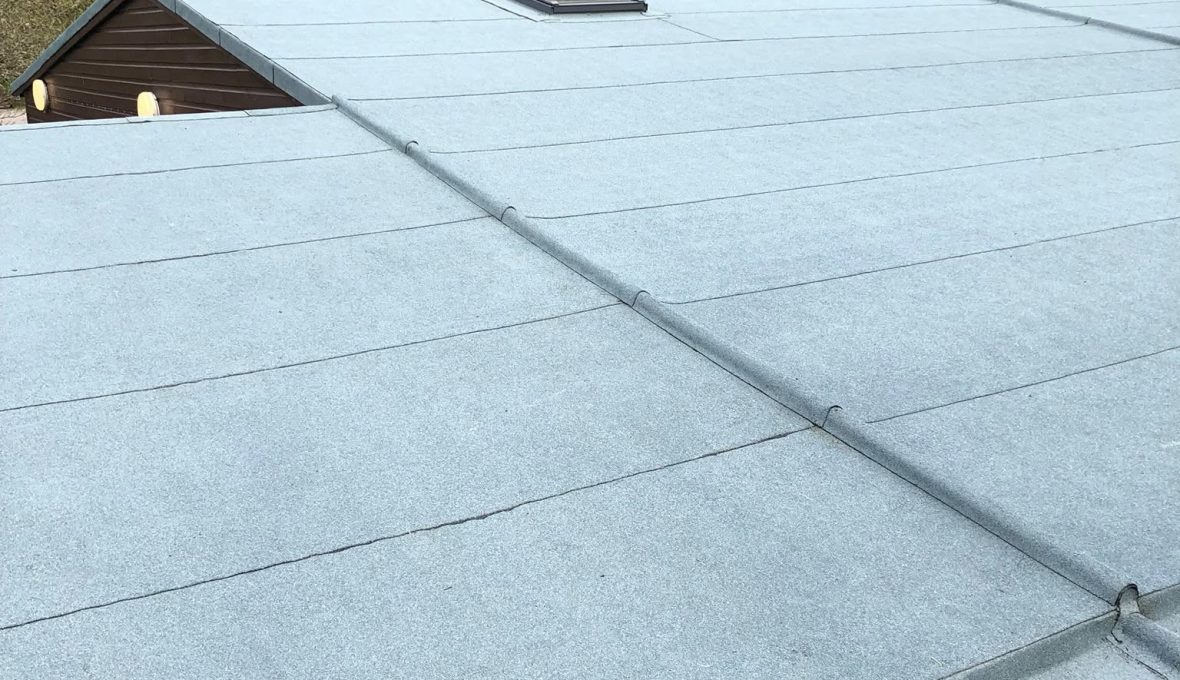
Felt roofing suits a lot of Stirling, Alloa, and Falkirk flat roofs, but the job lives or dies on perimeter trims, outlets, and upstand detailing.
Torch on felt is robust when welded properly, but it brings fire risk, so Safe2Torch style controls matter on occupied homes and timber decks.
Expect roughly £50 to £90 per m² installed for a straightforward felt overlay or renewal, and £120 to £180 per m² for a warm roof build-up with insulation, before scaffolding and decking repairs.
In Central Scotland, most felt roofs fail at the edges and details, not in the middle. If you have a garage, porch, dormer, or flat roofed extension in Stirling, Alloa, or Falkirk, felt can still be the right call, as long as it is specified properly and the installer does not cut corners on trims, outlets, and upstands. Modern bitumen felts are miles ahead of the old shed felt, but they still need the right deck, the right fall, and tidy leadwork where they meet masonry. Below is the straight lowdown on types, costs, lifespan, and what we look for when quoting.
When folk say felt roofing in Scotland, they usually mean a bitumen based membrane supplied in rolls and laid in two or three layers on a timber deck, normally OSB3 or exterior grade ply. You will see it on garage roofs in Bannockburn, porch roofs in Bridge of Allan, and flat roofed extensions round Falkirk where the main house is pitched slate and the flat section is the weak link. The membrane is either heat welded (torch on), self adhesive, or cold applied, then finished with a mineral cap sheet to take UV and wear.
A proper felt job is not just “roll it out and hope”. We are looking at the fall to the outlet, the condition of the deck, and how the perimeter is restrained for wind uplift, because storms like Babet, Isha, and Éowyn have a habit of finding the first loose edge trim. If you are deciding between systems, start with the basics on felt roofing, or if you want the broader picture across materials, see flat roofing.
On domestic work in Stirling, Alloa, and Falkirk, you will come across three main install methods. Torch on SBS modified bitumen is the common built up felt, the seams are heat welded and it is tough when it is done right. Self adhesive felt avoids hot works, but it needs a clean, dry substrate and the laps must be rolled properly or they will peel. Cold applied systems use adhesives and liquids to bond layers, handy where hot works are restricted, for example an occupied house with a timber deck and insulation below.
Finish matters as well. Most domestic felt roofs get a mineral finished cap sheet, it protects the bitumen from UV and gives a bit of grip for maintenance access. You can also specify reflective finishes, but in Scotland the priority is watertightness and wind resistance, not heat gain. If the roof has parapets or lots of penetrations, felt can be a good detail friendly option, but only if the upstands and terminations are done properly, and if needed, the junctions are supported with leadwork (Code 4 or Code 5 depending on the detail) and sound masonry.
Heat welded laps, strong around corners and upstands, but it is hot works, so fire controls are non negotiable. NFRC Safe2Torch guidance exists for a reason.
Lower fire risk than torching, good for smaller roofs, but it relies on priming, temperature, and proper lap pressure. It is not “stick it and forget it”.
Useful where you want to avoid flames altogether. It still needs dry conditions and correct curing, and it is only as good as the prep and detailing.
The big plus with felt is it is adaptable. Older houses round Stirling often have awkward junctions, stone walls, timber trims, and extensions added over the years. Felt can be dressed into upstands, formed into drips, and repaired locally if a split or puncture appears. On a typical garage in Alloa, we can often patch and reinforce a small defect for £250 to £450, if the deck is sound and the moisture has not travelled. It also has a short lead time, so you are not waiting weeks for a specialist kit.
The downsides are mostly about workmanship and exposure. Wind uplift is a real factor in Central Scotland, especially on edges, verges, and corners, so you need proper perimeter restraint, correct trims, and decent fixings into sound timber. Ponding is another killer. Felt will tolerate some standing water, but persistent ponding stresses laps and accelerates ageing, which is why we are fussy about falls, outlets, and gutters. If you are seeing bubbling, cracked laps, or water marks inside, read our warning signs guide (Article 2) in the related posts, then get it inspected before the next spell of bad weather.
– William Young, Owner
If you are choosing a flat roof covering in Scotland, I look at four things first, wind resistance at the perimeter, drainage, detailing round penetrations, and how the job will be carried out safely on an occupied property. Felt is strong on detailing, especially with a mineral cap sheet and tidy terminations. EPDM rubber is strong on simplicity, fewer seams on small roofs, and no torching. GRP fibreglass is strong on a hard wearing surface, good if you need regular foot traffic, for example over an extension where you access solar kit or a flue terminal.
Where felt loses out is hot works risk, and that is not theory, it is why NFRC Safe2Torch exists. Where EPDM loses out is that corners and terminations are system dependent, and if the adhesive or termination bar is wrong for the substrate, wind will find it. GRP loses out on weather window and deck movement, if the deck flexes, GRP can crack. If you want a deeper comparison, see Article 6 (Flat Roofing) in the related posts, or start with our flat roofing page for the options we fit in Stirling, Alloa, and Falkirk.
For 2026, a straightforward felt flat roof renewal on a domestic property in Stirling, Alloa, or Falkirk typically lands around £50 to £90 per m² installed, depending on access, perimeter detailing, and whether it is a two layer or three layer spec. EPDM is often £50 to £80 per m², and GRP is commonly £60 to £90 per m², but you can blow any of these figures up if you have rotten decking, poor falls, or awkward scaffolding. Warm roof build ups with insulation are a different bracket, usually £120 to £180 per m², because you are changing the build up and the detailing at edges and upstands.
The unknown that catches people is the deck. If we lift old felt and find the OSB3 is soft round an outlet or perimeter, you are into replacement boards. As a rough guide, allow about £40 per board on top, plus labour, disposal, and sometimes extra trims. In tight streets in Stirling town centre or older terraces round Falkirk, scaffold and skips can add £600 to £1,800 on a small job. If you want a broader view on what shifts quotes up and down, see Article 1 (Costs) in the related posts, and remember most roof work is priced with 20% VAT applied.
On a properly installed modern felt system, a realistic lifespan is usually 15 to 25 years. I have seen good three layer torch on roofs in Dunblane and Bridge of Allan still going strong after 20 years, and I have seen cheap single layer jobs fail in five. The difference is almost always detailing, drainage, and exposure. If the roof has proper falls, sound outlets, and the perimeter is restrained properly, felt holds up well against Scottish rain.
Storm cycles matter. When you get back to back wind events like Isha and Jocelyn, or the kind of central Scotland warnings we saw around Éowyn, the weak points show up fast. If your roof is exposed, up on a gable end, or has big parapets catching the wind, schedule a visual check twice a year and after major storms. If the flat roof meets a pitched slate roof, the interface matters too, especially where Scottish houses use timber sarking under slates. On mixed roofs we make sure the abutments, flashings, and water run are right, in line with good practice at junctions and the principles behind standards like BS 5534 and BS EN 12326-1 for the adjacent slate work.
Felt roofs do not need constant fussing, but they do need sensible checks, especially after autumn and winter weather. After heavy rain or wind, look for lifted edge trims, cracked laps, blisters, and blocked outlets. Ponding that was not there before is a sign the deck has moved or the outlet is restricted. If you cannot safely see it from a window, do not climb up, get a roofer to check it with the right access.
The simplest maintenance is keeping water moving. Clear leaves and silt from gutters and outlets, especially after storms in October to January. If your flat roof discharges into a gutter that is already half blocked, the water will back up onto the felt and shorten its life. If the issue is failing gutters or rotten timber at the eaves, we often end up doing the roof edge and fascias, soffits, and guttering at the same time because the details overlap. If you ever need patching on a torch on roof, it should follow Safe2Torch style controls, not a quick blowtorch fix beside dry timber.
Felt roofing is still a sensible option for a lot of domestic flat roofs in Central Scotland. It suits garages, porches, dormers, and extensions where the details are fiddly and you want a system that can be repaired without ripping everything off. The key is doing it properly, decent deck, correct falls, tidy outlets, and perimeter restraint that stands up to Stirling and Falkirk wind.
If your project includes changing the build up, for example adding insulation for a warm roof, it needs to align with Scottish Building Standards (Domestic Technical Handbook, January 2025 edition) where it applies. If you are in a listed building or conservation area, changes to appearance or detailing can trigger consent, so check before you alter finishes or edges. For landlords, the Repairing Standard expectation that a home is wind and watertight is a good yardstick even for owner occupiers. If you want us to look at it, start with roofing generally, or go straight to felt roofing if you know that is what you have.
Call us if you have water staining inside, bubbling felt, splits at laps, or persistent ponding that does not clear within 48 hours of dry weather. In Stirling and Alloa we often find the real leak point is an outlet, an upstand termination, or a wall junction, not the middle of the roof, so it needs a proper inspection.
If the roof is beside a flue, skylight, or timber fascia, do not attempt torch repairs yourself. We will tell you straight if it is a repairable defect, or if the deck is gone and you are better putting the money into a renewal, with proper edge trims and drainage so it stays watertight through the next winter. We cover Stirling, Alloa, Falkirk, Dunblane and the wider Central Scotland area. Call 01259 726404 or message us on WhatsApp.
Typically 15 to 25 years for modern built up felt, assuming correct falls, sound outlets, and good edge restraint. In exposed parts of Falkirk and Stirling, wind uplift and ponding can shorten that if the perimeter detailing is poor.
Yes, it can be, but it must be detailed for wind driven rain and strong winds, especially at edges, upstands, and outlets. On occupied homes we also plan around Safe2Torch style controls if torch on membranes are used.
There is not one best for every roof, it depends on exposure, detailing, and fire risk. For simple roofs EPDM is often a good low flame option, for complex junctions felt is very adaptable, and for hard wearing access areas GRP can suit if the deck is stable.
Often it can be repaired if the defect is local and the deck is still sound, expect roughly £250 to £650 for many domestic patches depending on access. If the decking or insulation is saturated or rotten, or you have multiple lap failures, replacement is usually the cheaper long term choice.

William has spent over two decades on Scottish roofs, working from apprentice slater to running a Stirling-based team that re-roofs villas and repairs storm damage across the central belt. He writes about roofing the way he talks on a survey: straight, costed and honest.
40+ yrs combined experience · Stirling · NFRC member
Targeted fixes for slipped slates, broken tiles, valleys, and leak tracing across Stirling and the Central Belt.
Full strip and replacement with breathable membrane, new battens, correct fixings, and tidy leadwork details.
Eaves level repairs that stop overflow and rot, often the hidden cause of recurring damp at the roof edge.