

Owner
9 min read
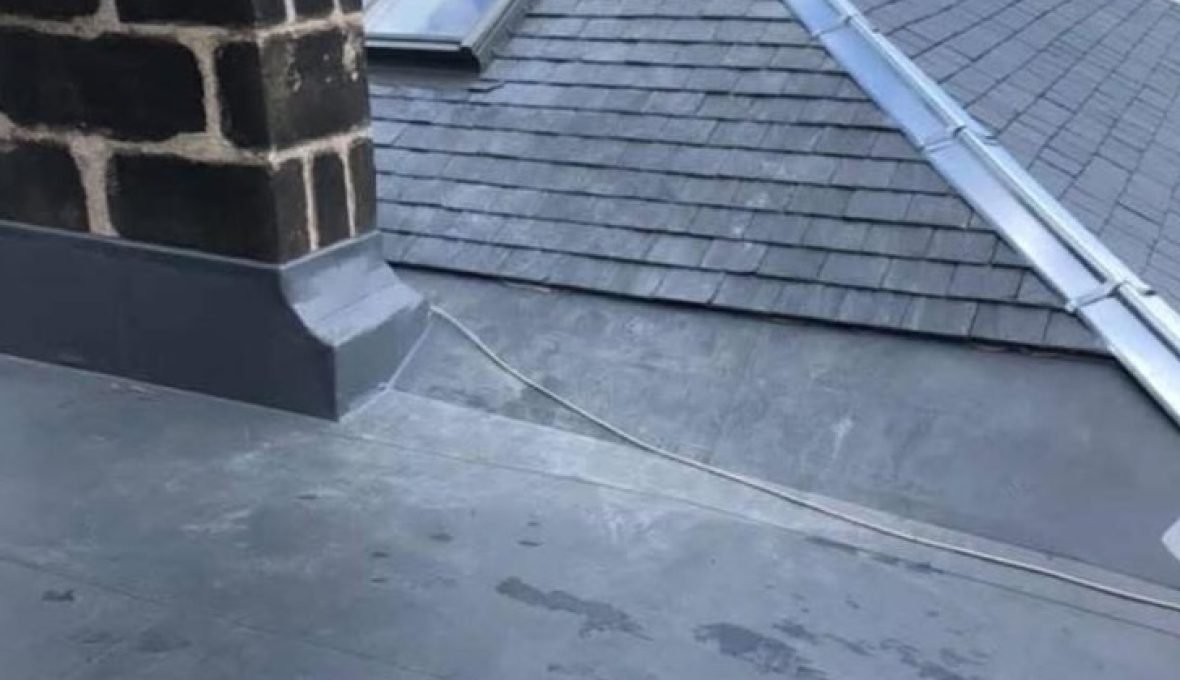
Flat roofs are not a problem in Scotland if the falls, outlets, and edge detailing are right, most leaks come from poor drainage and tired joints.
Pitched roofs shed water better and can last decades longer in slate, but storms will pull slates and ridges if fixings and underlay are not up to modern standards.
Budget roughly £60 to £180 per m² for a flat roof build-up depending on system, and £80 to £150 per m² for a slate pitched roof, then add scaffold and leadwork where needed.
Most Central Scotland homes end up with both, a pitched main roof and a flat roof on an extension, dormer, garage or bay. The better roof is the one that suits the job. A pitched roof wins on long-term lifespan and water shedding, especially in slate, but it costs more and it is more disruptive to replace. A flat roof can be the sensible choice for extensions and modern layouts, but it needs proper falls, clean outlets, and good detailing round edges and upstands. Below I will break it down for Stirling, Alloa, Falkirk and Clackmannanshire properties, with straight costs, lifespan, and what to watch for after a bad winter storm.
In Scotland, a “flat” roof is nearly always a low-slope roof, not truly flat. It relies on a continuous waterproof layer, usually torch-on felt, EPDM rubber, or GRP fibreglass, laid over decking with designed falls to an outlet or gutter. The success or failure is in the build-up: the falls, the drip edge, the upstands at walls, and how you dress pipes, rooflights, and parapets. If you are looking at replacement options for an extension or dormer, have a look at flat roofing and felt roofing so you can see what systems we commonly fit in Stirling and the wider Central Belt.
A pitched roof is a discontinuous covering, slate or tile, with overlaps that shed water down the slope. Underneath, you have a breathable membrane, counter-battens or battens depending on the spec, and ventilation at the eaves and sometimes at the ridge. Modern fixing and detailing should follow BS 5534, which is all about wind uplift resistance, correct battens, and correct fixings for the exposure. Natural slate itself is commonly supplied to BS EN 12326-1, but the slate lasting is only one part of it, the underlay, nails, leadwork, ridge and hip details still decide whether the roof stays watertight.
Stirling, Alloa and Falkirk get plenty wind-driven rain, then you add freeze and thaw on top. When you see named storms like Isha and Jocelyn in January, or the 80 mph plus gust forecasts we get in exposed parts of Scotland, it is not the average day that finds the weak points, it is the one bad night. A pitched roof generally copes better with heavy rain because it is shedding water as designed, but storms will exploit any weak fixing schedule, tired ridge mortar, or loose verge. That is why we specify modern fixings and underlay when we are doing roofing work, and why like-for-like patching on an older roof can still leave you chasing problems.
Flat roofs can perform brilliantly in this climate, but they are less forgiving. If the outlet blocks with leaves after autumn, or the falls are too shallow, you get ponding. Standing water does not always leak immediately, but it stresses seams, laps, and edge trims, especially when it freezes. The other common failure point is detailing at a wall upstand, chimney abutment, or a rooflight kerb. If you have a flat roof over a kitchen extension in Bannockburn or a garage in Alloa, the best habit is simple: clear the outlets and take a look after a storm. Small damage is cheap to deal with early, but it becomes a ceiling repair if it is ignored.
– William Young, Owner
Costs in Central Scotland are driven as much by access and detailing as they are by square metres. A simple 20 m² flat roof on a single-storey extension in Fallin with easy access is one thing. A 20 m² flat roof boxed in by neighbouring walls in Stirling town centre, with awkward parapets and a high gutter line, is another. As a guide for supply and fit in 2026, you are typically looking at £40 to £70 per m² for felt, £50 to £80 per m² for EPDM, and £60 to £90 per m² for GRP. If you are upgrading to a warm roof build-up with insulation and new decking, it is often £120 to £180 per m² depending on thickness, trims, and penetrations.
On pitched roofs, slate and tile costs can look higher per m² because of labour and scaffold, and because there is more going on: stripping, sorting sarking condition, new breathable membrane, new treated battens to the right slate gauge, and ridge, hip, valleys and leadwork. A slate roof guide range in 2026 commonly lands around £80 to £150 per m² installed, then you add chimneys, valleys, and access. In real houses around Bridge of Allan and Dunblane, the leadwork and chimney work can be a big part of the bill. If you are comparing full replacement, read re-roofing options alongside flat roof replacement so you are comparing like with like.
If you want a plain answer: a modern flat roof membrane commonly lasts about 15 to 40 plus years depending on system and how it is looked after. Felt is usually at the lower end, EPDM and GRP tend to push longer when installed properly with good edge detailing and no constant ponding. In Central Scotland, blocked drainage and repeated freeze and thaw are what shorten flat roof life more than anything else. That is why we spend time on falls, outlets, and upstands, not just the top layer.
A pitched slate roof can last 50 to 100 years and, with good slate and good installation, longer. The catch is that the slate is not always the thing that fails first. Nail fatigue, underlay breakdown, ridge and hip failures, chimney pointing, and lead flashings often need attention earlier. On older Stirling and Clackmannanshire houses, we regularly see perfectly serviceable slate sitting on tired underlay and rotten battens, that is when a “repair” becomes false economy. If you are seeing repeated leaks or widespread slipped slates, it is worth pricing re-roofing properly rather than paying for call-outs every winter.
Flat roofs do need more regular checks in Scotland, but the checks are straightforward. Twice a year is sensible, plus a look after any big wind event. You are looking for cracked lap edges on felt, splits round corners, loose edge trims, lifted flashing, and any standing water that is still there 48 hours after rain. Most importantly, keep outlets clear. A blocked outlet is the quickest route to a ceiling stain in a kitchen extension. If you have had a leak before, take photos of the roof after heavy rain, it helps pinpoint where water is sitting and where it is travelling.
Pitched roofs can go longer without attention, but problems hide. You might not see a slipped slate from the ground, and you might not notice a valley issue until it has soaked sarking and insulation. After storms, check ridge lines, hips, verges, valleys, and around chimneys, that is where wind gets in. In Falkirk and Grangemouth, we often get salt-laden wind as well, and that can be hard on exposed fixings and mortar. If you need small works done, it is usually cheaper to deal with it as a planned roof repair than as an emergency call in the middle of a wet January week.
Clear leaves from outlets, check edge trims and upstands, look for splits at corners and around pipes, and note any ponding that stays after 48 hours.
From the ground, look for slipped or missing slates, ridge and hip cracking, and valley debris. In the loft, check for damp sarking, staining round chimneys, and wet insulation.
Photograph any damage, including missing slates or lifted flashing, before anything is moved. Insurers are paying out more for property claims and good photos help your file move.
For like-for-like repairs, you are usually in straightforward territory, but Scotland has two separate hurdles when work is bigger: building standards and planning. Building work is guided by the Building (Scotland) Regulations, and the domestic technical handbook updated for warrants submitted from 1 January 2025 sets the baseline for structure, weather-tightness, insulation and ventilation. Your council building standards team is checking compliance with warrant and regulations, not “workmanship”, so you still want a contractor who does the details properly, membrane laps, batten fixings, sarking repairs and correct ventilation paths.
Planning comes into it when you change the look or form. In Stirling, there are multiple Conservation Areas, and listed building rules can apply too. A like-for-like slate replacement often keeps you out of trouble, but changing a pitched slate roof to something with a different profile, or changing the roof pitch, is the kind of thing that triggers questions. Flat roofs on extensions are usually fine, but if you are raising parapets, changing visible materials, or adding rooflights to a prominent elevation, check with Stirling Council planning. If you are a landlord upgrading insulation, remember VAT can be 0% on qualifying energy-saving materials like insulation when supplied and installed, but the roof covering itself is normally standard VAT at 20% unless it is part of a qualifying supply.
For most homes in Stirling, Alloa, and across Clackmannanshire, the choice is not either or, it is where each roof type makes sense. A pitched roof suits your main house roof because it sheds water, handles snow loading better, and gives you a loft space that can be insulated and ventilated properly. If your property is a sandstone villa in Bridge of Allan or an older terrace near Bannockburn, keeping slate and detailing it correctly is usually the sensible long-term play. That means good breathable membrane, treated battens to the correct gauge, sound sarking, and tidy leadwork in valleys and abutments (typically Code 4 or Code 5 depending on the detail).
A flat roof is often the right answer for extensions, dormers, porches and garages. It keeps the build simple, avoids awkward junctions with existing eaves, and can be upgraded to a warm roof to improve comfort in the room below. Where people go wrong is trying to save a few hundred quid on preparation. If the decking is soft, replace it. If the falls are wrong, correct them. If you are comparing systems, read our background pieces on flat systems and felt so you know what you are buying: Article 6 (Flat Roofing) and Article 9 (Felt Roofing). If you are looking at full roof replacement costs for a main roof, Article 1 (Costs) and Article 5 (Re-Roofing) give you the bigger picture.
If you are weighing up flat roof vs pitched roof Scotland style, the honest answer is that both work in Central Scotland when they are built and detailed properly. A pitched slate or tile roof is the long game, it is more tolerant of weather and it can last generations, but it needs modern fixings, good breathable membrane, and proper leadwork detailing round chimneys, valleys and abutments. A flat roof is the practical solution for extensions and modern layouts, and it can last decades, but it depends on falls, outlets, and edge detailing, and it wants a quick check after storms and leaf fall.
If you are unsure, get it surveyed. We will tell you what is sound, what is tired, and what will fail next, then price it properly with options. For any work that touches the main roof structure, or if leaks are recurring, consider a planned job through roofing or re-roofing rather than repeated patching. If it is an extension or dormer, we will talk you through flat roofing systems that suit Scottish weather.
Take clear photos of missing slates, lifted ridges, damaged flashing, and any internal staining before you move anything. Insurers are seeing higher claim volumes and higher repair costs, your photos help evidence what happened and when.
Call if you have water staining on ceilings, damp in the loft, repeated leaking at the same spot, or any visible sagging in a flat roof deck. On pitched roofs, call if you can see slipped or missing slates, ridge or hip cracking, debris in valleys, or leadwork lifting round a chimney or dormer.
No, not if they are built as a low-slope roof with proper falls, sound upstands, and clear drainage. Most issues we see in Stirling and Falkirk are blocked outlets and poor edge detailing after heavy wind-driven rain.
A modern flat roof membrane is commonly around 15 to 40 plus years depending on felt, EPDM or GRP and how well outlets are kept clear. A pitched slate roof covering can run 50 to 100 years or more, but underlay, battens, ridge, and leadwork often need renewal sooner.
Usually a basic flat roof is cheaper per m², roughly £40 to £90 per m² for felt, EPDM or GRP, but warm roof build-ups can be £120 to £180 per m². Pitched slate is commonly £80 to £150 per m², then scaffold and chimney, valley and leadwork costs can push totals up on older Central Scotland homes.
Yes, they normally want more frequent checks because small defects and blocked outlets can turn into leaks quickly in heavy rain. We tell homeowners in Alloa and Stirling to clear outlets twice a year and look again after major winter winds.

William has spent over two decades on Scottish roofs, working from apprentice slater to running a Stirling-based team that re-roofs villas and repairs storm damage across the central belt. He writes about roofing the way he talks on a survey: straight, costed and honest.
40+ yrs combined experience · Stirling · NFRC member
EPDM, GRP and high-performance felt systems with proper falls, trims and outlets.
Full strip and replacement with breathable membrane, new battens, correct fixings, and tidy leadwork details.
Targeted fixes for slipped slates, broken tiles, valleys, and leak tracing across Stirling and the Central Belt.