

Owner
9 min read
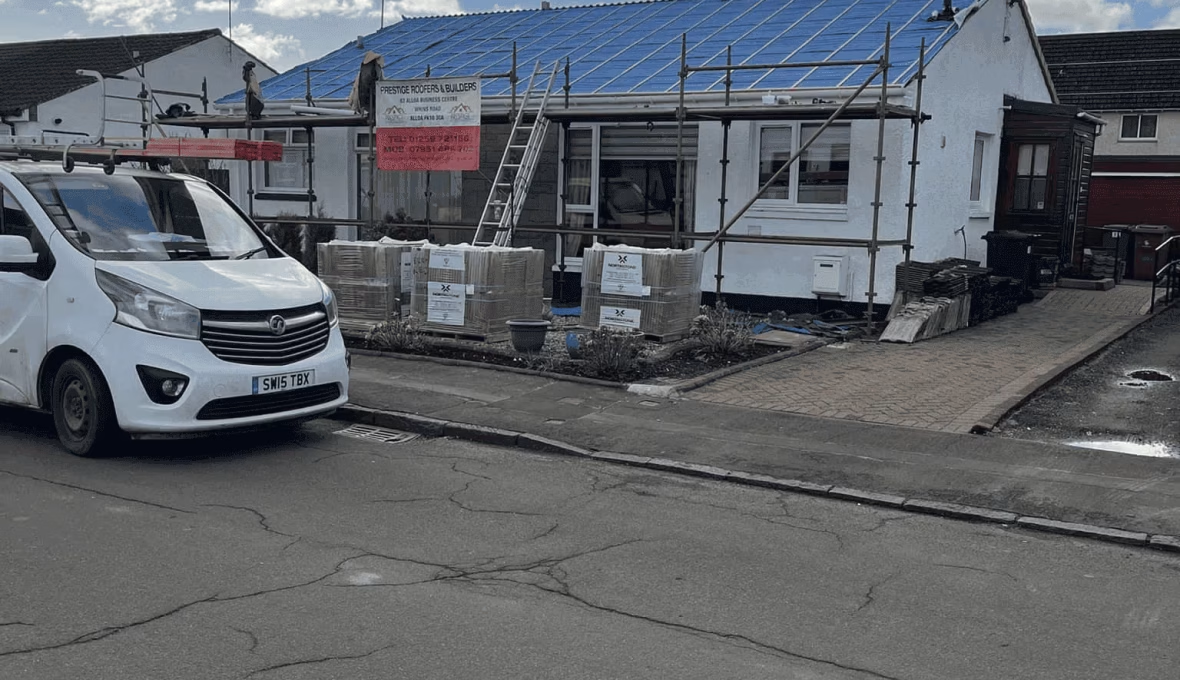
The best value upgrade for most homes in Stirling, Alloa and Falkirk is topping up loft insulation to the right depth, but only if you keep eaves ventilation clear.
Warm roof insulation makes sense when you are already stripping slates or tiles, it cuts cold bridging and helps manage condensation, but it costs more than a loft top up.
Wet insulation is wasted insulation, after storms like Éowyn, a quick roof check and repair keeps performance up and protects sarking, rafters and ceilings.
Roof insulation in Central Scotland is not just about saving a few quid on the heating, it is about keeping the house stable through cold snaps, wind driven rain and the sort of storms we have had across the M9 corridor. If your loft is under-insulated, or your roof is letting in rain at the ridge, verge or around a chimney, your insulation can get wet and stop working properly. The fix is usually simple: get the roof weathertight first, then insulate with the right build-up for your roof type, with ventilation and a vapour control layer where needed. Done right, it reduces heat loss and cuts condensation risk.
In Stirling, Alloa and Falkirk we get a mix of cold winters, driving rain, and regular high winds that test every ridge, hip, valley and flashing. The Met Office red warning for Storm Éowyn in January 2025 covered the Central Belt, and we saw the usual follow-on problems, lifted ridges, cracked tiles, missing slates, and water tracking onto sarking and insulation. Once insulation is wet, its performance drops sharply, then you start seeing staining on ceilings, mould on the cold corners, and timbers staying damp longer than they should.
Insulation also changes how the roof behaves. A well insulated loft is colder because less heat escapes into it, so the roof space needs proper airflow at the eaves, and sometimes high level ventilation too, to clear moisture. If you block the eaves with mineral wool, or you have no breathable membrane and poor cross ventilation, you are asking for condensation. We see it a lot in older villas in Bridge of Allan and Dunblane where there is a mix of original sarking, later felt underlay, and patch repairs. If you are unsure, start with a proper survey and an honest look at the roof covering, see roofing.
– William Young, Owner
Most homes in Clackmannanshire and Stirlingshire are improved at ceiling level. That is mineral wool quilt laid between the loft joists, then crossed over the top to reduce thermal bridging. It is cheap, quick, and gives the best return, as long as you keep a clear ventilation path at the eaves. You can also use rigid PIR boards over the joists if headroom is tight, or loose fill in awkward corners, but quilt is still the workhorse for straightforward lofts.
For rooms in the roof, typical on 1.5 storey homes and dormers, you insulate between rafters, usually PIR boards or mineral wool, then fit a vapour control layer on the warm side before plasterboard. The big detail is the ventilation gap and the underlay type. If you have a modern breathable membrane, you may not need the same ventilation as old bitumen felt, but you still need a plan that matches Scottish Building Standards (Domestic) and the roof build-up. When we are already stripping the roof for a full replacement, warm roof insulation above the rafters is often the neatest solution, that sits alongside new battens, correct slate gauge, and a breathable membrane, see re-roofing.
Mineral wool quilt, loose fill, or rigid boards over joists. Best value, but you must keep eaves ventilation open.
PIR or mineral wool between rafters with a vapour control layer. Needs careful detailing to avoid condensation.
Rigid boards over the rafters, counter-battens, then battens and slate or tile. Good for performance and reduced cold bridging.
Insulation above the deck with the waterproofing on top, typically EPDM or GRP. Vapour control layer position is critical.
Cold roof means the insulation sits at ceiling level or between the structure, and the void above it is ventilated. In a typical Stirling semi with a simple loft, this is the sensible route. The key is airflow, you want continuous ventilation at the eaves, and you do not want the mineral wool pushed tight into the fascia and blocking the path. If the roof covering is sound and you just want better energy efficiency, a loft top up is usually the quickest win.
Warm roof means the insulation is outside the structure, keeping rafters, sarking and deck warmer. This is common on flat roof upgrades and on pitched roofs when we are already stripping slates or tiles. It reduces thermal bridging at rafters, and it is often better for condensation control because the cold surface is moved outward. It does cost more, because you are into a larger scope with new membranes, counter-battens, fixings and often scaffolding. If the roof is near end of life anyway, it can be false economy to keep patching, in that case a planned upgrade alongside re-roofing can be the right spend, especially after repeated storm damage around ridges and valleys.
Loft insulation is where most people should start, but it needs done neatly. The common mistake we see in Alloa and Bannockburn is the insulation pushed hard into the eaves, covering the soffit vents and leaving the loft unable to clear moisture. You also want loft hatches sealed and pipes insulated, otherwise warm air leaks up and condenses on cold timbers. If you have old bitumen felt underlay that is sagging between rafters, you need to be even more careful, because it is less vapour open than a modern breathable membrane.
If you are topping up to around 270mm of mineral wool quilt, allow for raised loft boarding if you need storage. Compressing quilt under boards reduces its value, and it can trap moisture. Where we are doing roof works at the same time, we check the ridge, the verge, and around chimneys so the roof stays dry. There is no point fitting fresh insulation if you have wind driven rain getting past a loose ridge line or poor leadwork. If you need repairs before you insulate, see roof repair, and keep a simple seasonal routine, our Maintenance Checklist is a good place to start.
Insulation changes temperature and moisture patterns, so details matter. For pitched roofs, slates and tiles should be installed to BS 5534:2014 + A2:2018, and slate should meet BS EN 12326-1:2014 where specified. That is not paperwork for the sake of it, it affects batten sizing, fixings, and wind uplift resistance, which is a big deal in the Stirling to Falkirk corridor. If the roof covering is not secure, storms can lift tiles, expose breathable membrane, and soak the insulation below.
On older properties with sarking boards, you need to think about interstitial condensation and timber moisture. If you add insulation without a proper vapour control layer on the warm side, moist air from kitchens and bathrooms can migrate up and condense on cold sarking or rafters. On flat roofs, we see failures where insulation has been added in the wrong place, causing the deck to sit cold and wet. If you are upgrading a flat roof, do it as a proper warm deck system with the right membrane, see flat roofing. For older felted build-ups, we still carry out robust refurbishments and renewals, see felt roofing.
For most lofts, the cost is not the insulation itself, it is access, safe working, and making sure ventilation is not blocked. As a rough 2026 guide in Central Scotland, a straightforward loft top up with mineral wool quilt to around 270mm is often £650 to £1,250 supplied and fitted, depending on property size and how clear the loft is. If you need raised boarding for storage, budget another £400 to £1,200 depending on area and whether we are building a proper raised deck to avoid compressing the quilt.
Warm roof insulation is a different job, because it usually comes as part of a strip and renew. If you are renewing a pitched roof and adding insulation above rafters, typical all-in costs for a standard 3 bed semi can move into £12,000 to £22,000 depending on slate or tile choice, scaffolding, ridge system, valleys, and leadwork (often Code 4 or Code 5). Flat roof warm deck upgrades, including insulation and a new waterproof finish, are commonly £3,500 to £8,000 for an extension or garage roof, depending on size, edge details, and whether timber deck repairs are needed. If you want a bigger picture on renewal scope, read our Re-Roofing Guide and for waterproofing options see Felt Roofing.
There is funding available, but you need to match the scheme to your circumstances. Home Energy Scotland has a Grant and Loan scheme, with grant funding up to £7,500 for energy efficiency improvements such as insulation, and potentially up to £15,000 total grant when combined with clean heating measures, depending on what you install. For eligible households, Warmer Homes Scotland can provide support worth £10,000 or more for energy saving improvements. If you are older or disabled and need help navigating repairs and improvements, Care and Repair Scotland is a useful route for independent support.
On tax, it is worth knowing that insulation installed as an energy saving material in residential property can qualify for 0% VAT until 31 March 2027 under current rules, but it has to be supply and install and meet the conditions. Supply-only materials are usually charged at the standard 20% VAT. If you are in a listed building or a conservation area in Stirling, check first before altering roof build-ups, listed building consent can be required even for changes that are not obvious from the street. We can talk you through what is practical on site and what needs checked with the council.
If you want better energy efficiency in Central Scotland, start with the basics: a dry, secure roof, then the right insulation, then the ventilation and vapour control details that stop condensation. For most houses in Stirling, Alloa and Falkirk, loft insulation is the best value upgrade, but only if the eaves can still breathe and you are not hiding a leak at the ridge, valley, or around the chimney. If your roof is at the stage where slates are slipping, underlay is failing, or you have had repeat storm damage, it can make more sense to plan a full renewal and upgrade the insulation as part of the build-up.
If you are unsure which route suits your property, we will give you a straight answer, what you need now, what can wait, and what it is likely to cost. We are NFRC members, fully insured, and we give a written workmanship guarantee on our work. A proper survey beats guesswork every time.
For many residential supply and install insulation jobs, the VAT rate is currently 0% up to 31 March 2027. If you are buying materials only, it is usually standard 20% VAT, so ask before you price it up.
Call us if you have any sign of water getting into the loft, damp insulation, staining on ceilings, or daylight showing at the eaves, ridge, verge or around the chimney. After heavy winds, it is common to lose ridge tiles and a few slates on older roofs, and that is enough to soak insulation and start rot in sarking and rafters.
Also call if you are converting a loft, insulating a room in roof, or upgrading a flat roof, the condensation risk is all in the layers and the detailing. We can check ventilation paths, underlay condition, and whether a cold roof or warm roof build-up is the right answer for your house in Stirling, Alloa, Falkirk or wider Central Scotland. We cover Stirling, Alloa, Falkirk, Dunblane and the wider Central Scotland area. Call 01259 726404 or message us on WhatsApp.
Yes, especially in the Central Belt where high winds and wind driven rain can expose and wet insulation after storms. A properly insulated and ventilated roof reduces heat loss and helps prevent condensation in colder lofts.
For most homes with a standard loft, mineral wool quilt at ceiling level is the best value. If you are re-roofing or have a room in roof, a warm roof build-up or rafter insulation with a vapour control layer is often the better long term option.
Often, yes. Home Energy Scotland can offer grant funding up to £7,500 for energy efficiency measures such as insulation, and Warmer Homes Scotland can provide support worth £10,000 or more for eligible households.
It can, but only if ventilation and moisture control are done properly. Cold roofs need clear eaves ventilation, and warm roofs rely on the right layer order, including a vapour control layer where required, to prevent condensation.

William has spent over two decades on Scottish roofs, working from apprentice slater to running a Stirling-based team that re-roofs villas and repairs storm damage across the central belt. He writes about roofing the way he talks on a survey: straight, costed and honest.
40+ yrs combined experience · Stirling · NFRC member
Targeted fixes for slipped slates, broken tiles, valleys, and leak tracing across Stirling and the Central Belt.
Full strip and replacement with breathable membrane, new battens, correct fixings, and tidy leadwork details.
Robust felt systems for flat and low pitch roofs, including warm deck refurbishments.